Now in its seventh year, the Master of Science in Agricultural and Applied Economics Professional Option (MSPO) program continues to equip students with skills in economic reasoning, data analysis, and technical communication, and prepare them for careers in research, consulting, government and industry. The curriculum is frequently updated to meet the ever-evolving demands of the workplace, including new classes on topics such as machine learning, data science, and agribusiness economics and management. MSPO students can also now choose between two career tracks with one focused on preparing students for careers in research, applied economics, and PhD programs, and a second focused on students aiming for careers related to agribusiness management and consulting, business economics, and commodity trading.
Recent MSPO graduates have gone on to work as data scientists, policy advisors, research consultants, data analysts and economists at a variety of organizations in the U.S. and around the world, including Deloitte, Madison Gas & Electric, World Vision, Alliant Energy, the Bank of China, America’s Credit Unions, KPMG and Alibaba. Moreover, every year, between two and four MSPO graduates receive fully funded offers from top ranked PhD programs such as Duke, UC Berkeley, UC Riverside, University of Illinois at Urbana-Champaign, and various departments at UW-Madison.
Recently, we were able to catch up with two graduates from the MSPO class of 2025—Lincoln Miller and Hunter Downey—to hear about their current positions and how the MSPO master’s degree has helped them on their career journey. Lincoln now works as an Economist at the Public Service Commission (PSC) of Wisconsin, and Hunter is a Business Analytics Specialist at Farm Bureau Financial Services in Des Moines, Iowa. Both attended UW-Madison as undergraduates before entering the MSPO program—Lincoln majored in AAE and earned a certificate in economic analytics, and Hunter double-majored in Agricultural Business Management (ABM) and biology.
Below is a brief transcript of these interviews[1]:
“How do you like your current job, and what are your favorite aspects of the work?”
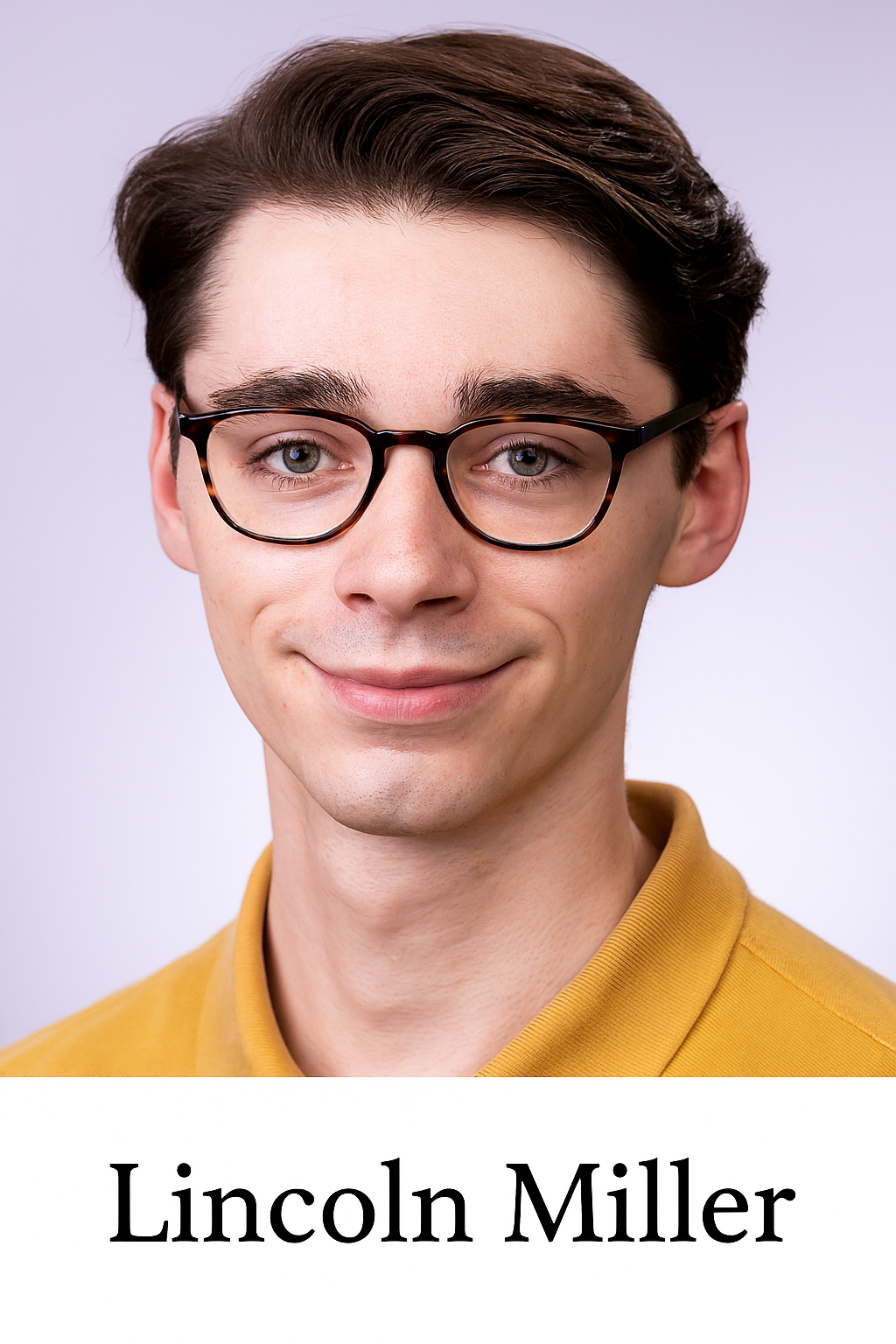 Lincoln: “The energy industry is very dynamic, and I feel like I’m always learning a lot. It keeps me engaged every day. Being a part of discussions about cost allocations at a time when there’s a lot of growth is a unique moment in this industry. Figuring out how I can apply the microeconomic models I learned about at university to the data I work with now is a challenge I enjoy.”
Hunter: “I like that it’s not a task-based job. It’s project-based, and I always get something new to think about and work on. It’s fun to put your creative mark on a project, and the business really encourages that. They want to see what you can do with the data—which could be something really cool that’s valuable and perhaps new to them. They don’t expect you to follow a set framework, and that’s a fun part of the job for sure.”
“How did the MSPO program help prepare you for this job?”
Lincoln: “The emphasis that MSPO places on tangible soft skills was really helpful. That includes communication and presentation skills,  and tailoring my analytical skills in a way that’s useful in a workplace environment. I know that developing those skills further, like how to present yourself and think critically, will also be really important as I advance in my career. My practicum project, where I had to develop a research question, collect data, and reach my own conclusions, with some guidance, was a very useful model for the type of work I do now.”
Hunter: “When I was interviewing for this job, they asked if I had any experience building visualizations or working with data, and I said: ‘Oh, yes! Absolutely!’ Our econometrics classes gave us a lot of data analysis experience. So, I wasn’t afraid to say that I was comfortable making data-based decisions or using data to generate new insights, and that’s exactly what Farm Bureau was looking for. In my practicum project, I produced many graphs, charts and tables. I actually showed them my practicum presentation in the interview, and I think they were super impressed. MSPO gave me that analysis experience but also helped me develop interpersonal skills working with researchers and talking to people all the time.”
“What advice do you have for current or prospective MSPO students?”
Lincoln: “If I was starting over, I would focus even more on person-to-person networking. Leveraging informal networking to get your foot in the door with a potential future employer should be one of your primary goals. I also recommend putting effort into NOT doing an AI-generated resume or cover letter because it helps you prepare for your interview. Anyone can ask AI to generate a cover letter for them but writing a more personal and unique letter will set you apart from other candidates.”
Hunter: “I recommend taking the practicum seriously and putting a lot of effort into it because it is a huge resume builder. Companies are going to look at that project and ask questions about it. It can be a big selling point that could help you land that dream job. If you want to work in a certain industry, being able to connect that to your practicum will work really well, whether it’s a job in banking, insurance, solar energy or anything else. Doing a practicum project that interests you is important because it shows the people you talk to that you are interested in and passionate about your work. So, stay open-minded and look for a project that you feel excited about. That made me successful in MSPO.”
[1] Edited for concision and clarity.